
Unfortunately, this is not the first time such incidents of suicide or self-immolation have come across in society. But such incidents continue to keep the public very concerned. Suicide or self-immolation is the deliberate act of taking one’s own life.
Occasionally, there are current reports of suicide and/or suicide attempts by the Nepali-speaking community residing in the United States. These tragedies tend to bring up an important question for society: Why does the Nepali community have a higher rate of suicide than other communities, or is it a result of our society, attitudes towards mental health, and immigrant life?
This question must not be answered only with personal feelings, opinions, or expressions. Instead, it is to be found in facts and scientific investigation.
In the United States, there is no reliable government data or research available for all Nepali-origin immigrants that separates the rate of suicide among them. So, there is no proof or evidence substantiating the finding that “Nepalis have higher rates of suicide or self-immolation than other communities”. A 2012 investigation by the U.S. Centers for Disease Control and Prevention (CDC) revealed that many individuals suffered significant psychological distress, depression, symptoms of post-traumatic stress disorder (PTSD), unresolved grief and other mental health issues; these all were identified as important risk factors related to suicidal behavior in the population that’s Nepali-speaking, particularly among the Nepali-speaking Bhutanese refugee population. Such states of mind can result from a variety of sociological and individual factors.
Before we briefly consider a relevant example. The Bhutanese refugees, who left Bhutan decades ago and spent years in refugee camps and were subsequently resettled in third countries, still grapple with a heavy emotional burden. Many of these pains are yet unsung today. The burden can be best described as the “invisible pain of migration.
While a third-country resettlement may offer more economic opportunities and raise living standards, it also has emotional and psychological issues. Not speaking the language well, having to deal with new legal and social structures, being estranged from family members, financial pressures, and the expectations of distant family members all add to mental stress. It may look like someone is successful in their life, but many people feel lonely on the inside. The combination of these conditions can slowly result in mental health illnesses over time.
Yet another thing is the public’s lack of understanding about mental illness. Mental health has yet to be fully embraced as part of general health in Nepali society. Rather, it is commonly considered to be a social disgrace.
Anyone who expresses this type of stress or depression is often told not to think too much or pray to God or not to tell anybody about it. Consequently, many people do not get timely professional treatment. Several studies in Nepal and among South Asian immigrant communities have been conducted, and all have concluded that stigma related to mental illness is one of the main reasons why Nepali speakers do not seek professional mental health care. Kohrt et al. and Luitel et al. are among these studies.
Another observation is that many Nepalis in America feel that there is a social pressure that they do not see: “If you come to America, you must be successful.
When a person has a job loss, relationship issues, academic issues, or financial issues, it is hard for them to be able to share that with their family members or friends. Social media has amplified it, urging people to show how successful they are and hide their problems. This unhelpful comparison can cause great psychological upset and sadly, these have become common stories of people taking their own lives due to such comparisons.
Changes within the family also serve as an important source of psychological stress. People who had grown up in a close-knit joint family system may experience a sudden shift to a very individualistic society where emotional support is not as forthcoming. As this emotional resiliency diminishes, some people start to feel like their lives are no longer worth living, and end up committing suicide. Family and marital relationships may also become strained due to time constraints, financial pressures, differences in culture, and household responsibilities, which may lead to mental stress and sometimes to tragic consequences.
Let me now touch briefly on special situations of Nepali speaking Bhutanese Americans and their psychological problems.
For some, the shock of uprooting from one’s homeland is difficult to shake off. The psychological effects of forced displacement, refugee life in camps, loss of identity and the adaptation to a new life abroad are all deep-seated.
CDC’s investigation of suicides among refugees from Bhutan in the United States (2009-2012), and several other mental health studies conducted with refugees from Bhutan, indicated high prevalence of psychological distress, post-traumatic stress symptoms, depression, and suicidal thoughts among parts of this community, highlighting the need for culturally relevant and timely mental health interventions.
One of the other challenges is the pervasive belief that dollars will solve all problems. In actuality, however, one of the greatest errors one can make is to measure success in life by monetary and material gains. People, even those with stable financial situations, can experience social isolation, troubled relationships, mental health issues and disruptions to community – all of which are known risk factors for suicide. Social determinants of suicide risk, such as social isolation, relationship problems, mental illness, financial problems and loss of community support, have been identified by the World Health Organization (WHO), the United States Centers for Disease Control and Prevention (CDC), and many peer-reviewed public health studies, as predictors of suicide in many countries and populations.
We shall now discuss some of the possible solutions to be discovered to prevent suicide and self-immolation.
The first and foremost thing is that it’s not enough to just have a diagnosis. It can’t be solved by just recognition. It is everyone’s responsibility to be part of the solution to preventing suicide.
Mental health awareness should be a priority, and communities should have open discussions about mental health. The counseling services should be further expanded in the Nepali language, and awareness and educational activities should be developed and strengthened. Mental health education should also be a part of the outreach and orientation activities of religious and community organizations.
Likewise support groups for students and recently arrived immigrants should be created. There is a need for communities to proactively seek out people who are suffering from psychological stress and provide them with access to counselling and support services. It is the responsibility of intellectuals, educators, health care and community leaders to spread the message that “Seeking help is not a sign of weakness.” The message should be spread throughout the community.
If timely support becomes available, many lives can undoubtedly be saved. It is one of the most pressing challenges of today to develop this commitment.
The CDC has recognized that there are no nationally representative estimates of the rates of suicide deaths among people of Nepali origin in the United States at this time, but no U.S. national surveillance system currently tracks rates of suicide deaths among all Americans of Nepali origin. Despite this, existing studies indicate that immigration-related stresses, social isolation, mental health stigma, family conflict, financial stress, and past trauma could play a role in the risk of suicide for some Nepali-speaking communities, including Bhutanese refugees.
So it is not appropriate to spread rumors or unconfirmed statements. Rather, it is important to encourage open, discussion-based dialogue, mental health awareness and timely professional help. In order to create a safer, healthier, and more hopeful community, it is only through this approach that we must go.
Suggested Reference List
Ao, T., Taylor, E., et al. (2012). An investigation into suicides among Bhutanese refugees in the United States, 2009–2012. U.S. Centers for Disease Control and Prevention.
Centers for Disease Control and Prevention. (2024). Suicide Prevention. https://www.cdc.gov/suicide
Kohrt, B. A., & Hruschka, D. J. (2010). Nepali concepts of psychological trauma and mental illness. Transcultural Psychiatry.
Luitel, N. P., Jordans, M. J. D., Sapkota, R. P., et al. (2015). Mental health care in Nepal: Current situation and challenges for development of a district mental health care plan. Conflict and Health, 9(3).
Porter, M., & Haslam, N. (2005). Predisplacement and postdisplacement factors associated with mental health of refugees and internally displaced persons: A meta-analysis. JAMA, 294(5), 602–612.
Steel, Z., Chey, T., Silove, D., et al. (2009). Association of torture and other potentially traumatic events with mental health outcomes among populations exposed to mass conflict and displacement. JAMA, 302(5), 537–549.
U.S. Department of Health and Human Services. (2023). Our Epidemic of Loneliness and Isolation: The U.S. Surgeon General’s Advisory.
World Health Organization. (2021). Suicide worldwide in 2019: Global Health Estimates. Geneva: WHO.
Author’s Note
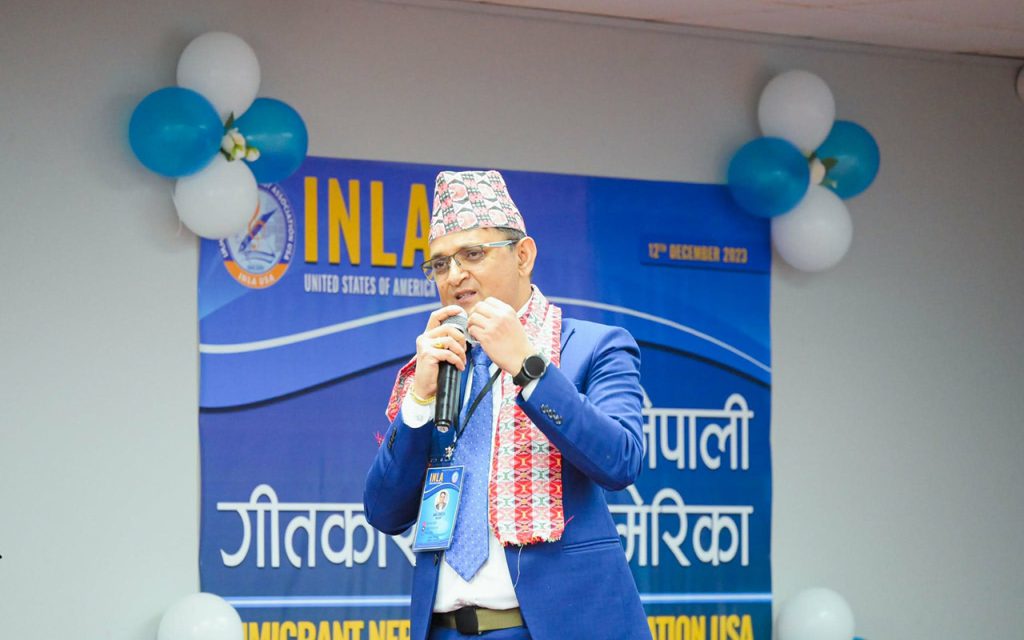
Dr. Hari Uprety is a public health, mental health, community advocate, researcher, and writer interested in public health, mental health, immigration, and the health of Nepali-speaking communities. His research focuses on evidence-based analysis of problems of social complexity and fostering informed public discourse based on research, not assumption. Dr. Uprety aims to bring mental health issues to the forefront, combat the stigma surrounding mental health, encourage early treatment and intervention for mental health, and create communities that are more supportive and compassionate. He feels that avoiding avoidable tragedies and enhancing the quality of life of immigrant families can be done through meaningful conversations, involving credible evidence and community engagement.
In this article, he did just that, exploring the subject of suicide from a public health, migration, and social responsibility perspective and urging communities to bring understanding, empathy, and timely access to help and support instead of misinformation.